LASIK
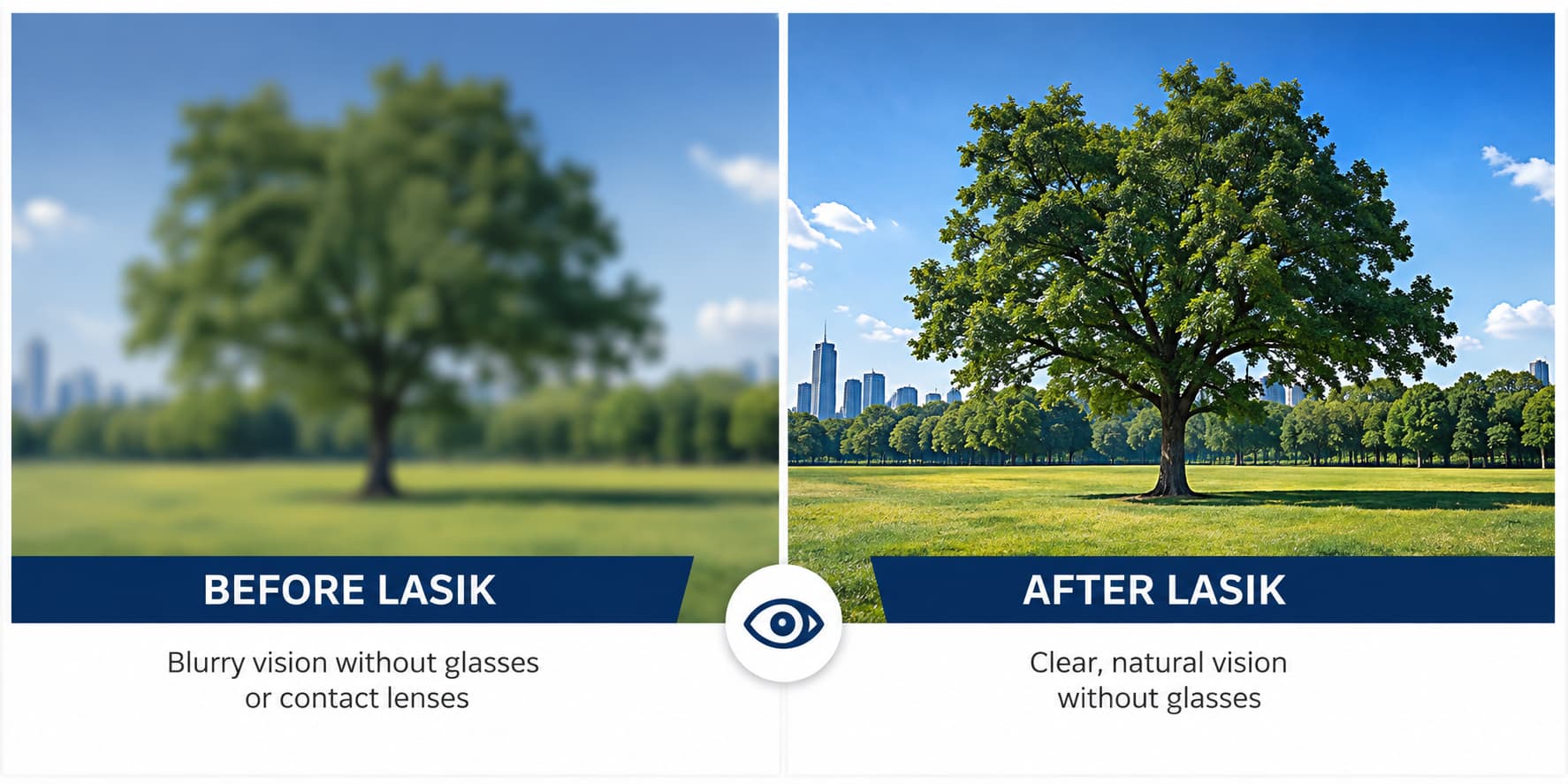
A corneal flap is created and underlying tissue is reshaped. Recovery is often relatively quick, but corneal and ocular-surface suitability are essential.
Shifa International Hospital, Islamabad
Refractive surgery
Refractive surgery begins with candidacy, not a procedure choice. Corneal shape, prescription, eye health, age and visual priorities determine which options are reasonable.
Understanding the concern
LASIK and PRK reshape the cornea, while an implantable collamer lens is placed inside the eye without removing the natural lens. These options are not interchangeable and not everyone is suitable for surgery.
A careful assessment should identify dry eye, unstable prescription, corneal weakness, retinal risk, lens change and expectations that could make surgery inappropriate or alter the recommended approach.
What patients notice
These features can overlap with other eye conditions. Examination is needed to establish the cause.
Specialist assessment
Screening combines precise measurements with a full medical eye examination. A quick prescription check is not enough.
The prescription is measured carefully and compared with previous results to assess stability.
Topography or tomography and pachymetry evaluate corneal shape, symmetry and tissue available for treatment.
Dry eye, eyelid health and pupil behaviour can influence comfort and optical symptoms after surgery.
The lens and retina are checked, particularly in high myopia where retinal assessment is important.
Treatment planning
The aim is to select a safe, proportionate option with realistic expectations, including the possibility that no surgery is the right recommendation.
A corneal flap is created and underlying tissue is reshaped. Recovery is often relatively quick, but corneal and ocular-surface suitability are essential.
The surface layer is removed before corneal reshaping. It avoids a flap but involves a longer surface-healing period.
A lens is implanted inside the eye, often considered for selected moderate or high prescriptions or when corneal laser is less suitable.
Glasses, contact lenses or waiting may be safer when measurements, age-related lens change or expectations make intervention inappropriate.
Refractive assessment
At a glance
Prof. Amer Awan assesses LASIK, PRK and ICL options according to corneal shape, prescription, ocular health, lifestyle and a complete eye examination. The aim is to identify a suitable option rather than favouring one procedure for everyone.
Related surgical video
From Prof. Amer Awan's official YouTube channel. This professional video contains surgical footage.
Questions patients ask
There is no universally best procedure. Prescription, corneal structure, dry eye, age, retinal health, occupation and priorities determine which options are reasonable.
No. Residual prescription, dry eye, healing variation and other eye conditions can affect the result. Enhancement or glasses may still be needed.
Refractive surgery does not stop age-related loss of near focus. The likely need for reading correction should be part of preoperative planning.
Contact lenses can temporarily alter corneal shape. The required break depends on lens type and should be confirmed when booking assessment.
Continue reading
General information sources: Prof. Amer Awan - current public profile.